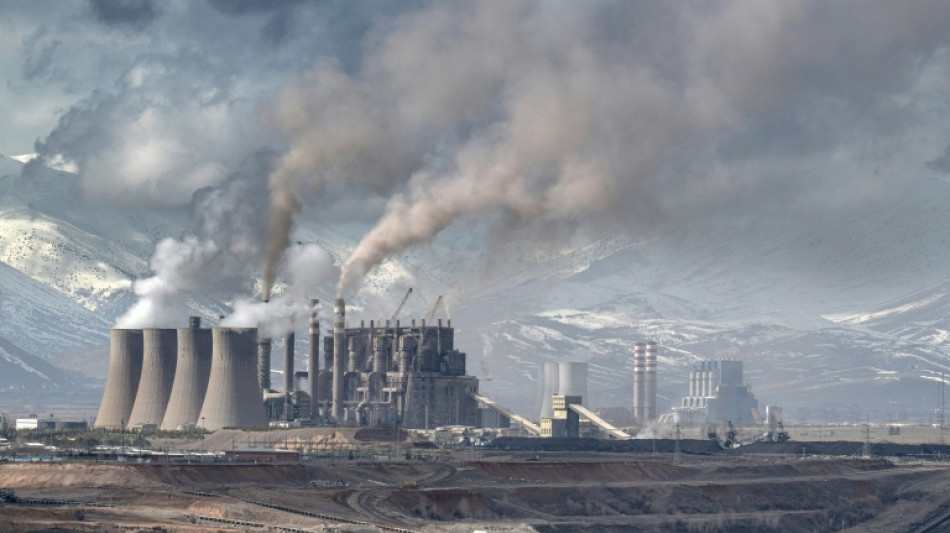
Bad COP, worse COP? EU tempers hopes for UN climate summit / Photo: Ozan KOSE - AFP/File
After having its hopes dashed for a more ambitious deal last year in Brazil, the European Union is setting its sights low for next month's COP31 climate summit in Turkey.
The UN gathering in Antalya is being framed by Brussels as more about "implementation" than major announcements, with a focus on efforts to replace fossil fuels with electricity throughout the economy.
"It would be counterproductive to arrive with overly high expectations and end up disappointed," a European Commission official, granted anonymity to discuss internal thinking, told AFP.
Environment ministers from the EU's 27 nations will formally set the bloc's common position at a meeting next Monday in Luxembourg.
Ireland, which holds the EU's rotating presidency, has in advance circulated a European communication strategy for COP31.
"Focusing on a single major breakthrough has been an understandable objective ahead of previous COPs but the alteration in geopolitics requires a readjustment and renewed strategic approach," the document seen by AFP says.
"If expectations are framed in those terms, the absence of such a breakthrough could subsequently be presented as evidence of failure."
- Global headwinds -
With climate sceptic Donald Trump withdrawing the United States from the negotiations, international efforts to combat global warming had already taken a battering.
But now the situation looks even less promising as surging energy prices have put major oil and gas producers in a position of strength that makes them less likely to want to discuss phasing out fossil fuels.
The EU insists it remains the global leader on climate action and is the principal international donor in the field.
But with numerous countries in the bloc facing strains on their budget, the Irish presidency's strategy document for Antalya makes clear there is little will to go much further at the moment.
"While we are open to engaging on how to deliver on existing finance commitments, there is no appetite for new financing," the document says.
The more low-key approach this time around, comes after the bloc faced internal criticism for being too naive at previous COP summits and going too far without convincing other major powers to follow suit.
France has regularly called for the EU to be more "transactional", particularly with India, making financing dependent on concrete climate commitments.
Europeans were left deeply frustrated at the last COP in Brazil, which concluded without a mention of phasing out fossil fuels -- and don't want a repeat.
"It was a very bad experience," a UN official told AFP.
This time around "they do not want to take any risks" and are adopting a "very defensive" stance, the official said.
- 'Flashing orange' -
While the EU still stakes its claim as a global trailblazer -- it is arriving at the COP having recently watered down its own environmental legislation.
As it struggles to compete with China and the United States, Brussels has been on an increasingly business-friendly push.
The most recent example last month was the commission proposing to postpone the implementation of a law targeting methane -- an extremely polluting greenhouse gas -- by one year, from 2027 to 2028.
This legislation, aimed at forcing companies importing hydrocarbons to monitor and report methane emissions associated with their supplies, was opposed in particular by Washington.
This backward step from the EU was a major blow for environmental organisations, as well as to the UN, which in June launched a "call for global action" against methane, the second-largest contributor to climate change after CO2.
At the European level "all the warning lights are flashing orange" on climate issues, the UN official said.
Not so, argues the European climate commissioner Wopke Hoekstra.
"The EU is staying the course on climate action and will continue to show leadership at COP," he said.
"Clean electrification needs to be at the heart of the discussion. We also need to accelerate implementation of the Paris Agreement."
For starters, EU countries will need to decide whether to back a Turkish initiative aiming to set a non-binding target for countries to reach 35 percent of electricity in their energy consumption by 2035.
L.M.Domiano--LDdC