Maui Wildfire Study Faces Funding Crisis Amid Health Concerns
Three years after the deadly Lahaina wildfires, the Maui Wildfire Exposure Study (MauiWES) has become a critical lifeline for survivors, providing health screenings, mental health support, and insurance connections. However, researchers Ruben Juarez and Alika Maunakea warn that the initiative is on the brink of collapse as key federal grants remain undecided and recent state funding efforts failed to pass.
LAHAINA, Hawaii — Early on a Saturday morning in May, Ruben Juarez took the 45-minute flight from Oahu to Maui, repeating a journey he had made dozens of times over the past three years. He landed at Kahului Airport with his partner, Alika Maunakea, and drove along a winding highway beside the Pacific Ocean to the Lahaina Comprehensive Health Center.
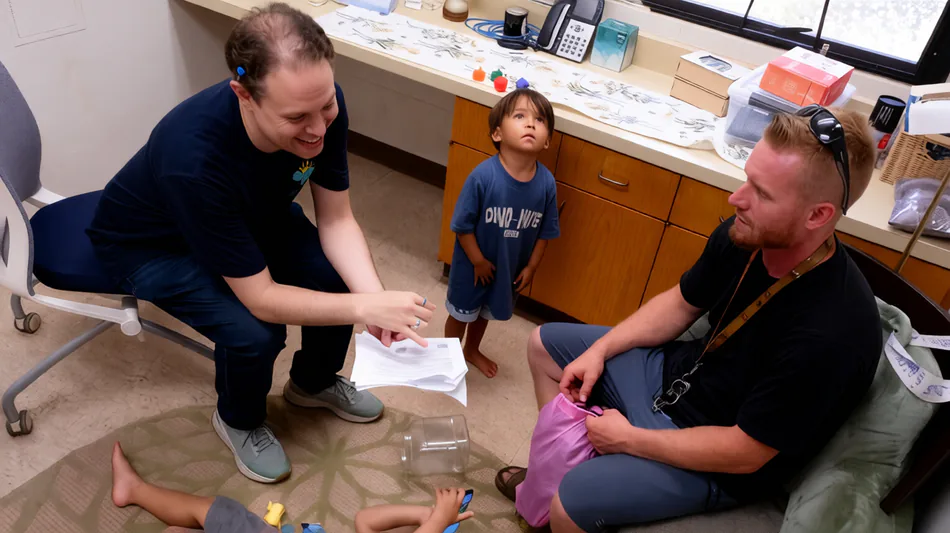
There, they set up stations for blood collection, lung function tests, and mental health check-ins, directing a team of Ph.D. students and local healthcare providers. They waited for wildfire survivors to arrive for what might have been their last major event to assess community health needs before potential funding cuts forced the study’s end.
The urgency of the moment was underscored by the lingering devastation of the Aug. 8, 2023, wildfires, which killed at least 102 people, displaced nearly 13,000 residents, and destroyed more than 2,200 buildings in Lahaina. Three years later, only 15 percent of the destroyed structures have been rebuilt.
Juarez, an economist, and Maunakea, a biomedical scientist, both professors at the University of Hawaii, never expected to focus on disaster recovery. However, the overwhelming scale of need thrust them into the role. They created the Maui Wildfire Exposure Study, or MauiWES, as a rapid response effort to track the health impacts of the fires on survivors.
Over three years and with 2,500 participants, MauiWES evolved from a research project into a comprehensive web of community support. The initiative provides free testing, therapy, food assistance, cash support, and help connecting participants with doctors and insurance. Researchers hope the model can serve as a national blueprint for public health response after disasters.
Despite its success, critical federal support to sustain the effort for at least a decade was running out. Grant applications had met with silence for months, and just two weeks before Juarez and Maunakea arrived on Maui, state funding they relied upon fell through.
At the health center that Saturday, Maunakea greeted Lisa and Nilsson Panis, siblings born and raised in Lahaina. He explained the day’s protocol: urine samples to track environmental exposures, saliva collection for biomarkers of stress and aging, blood tests for metabolic function, lung health assessments, and mental health screenings. At the end, they would meet with a volunteer physician to discuss results and receive $100 compensation.
“We’re trying to do this every year,” Maunakea told the Panises, determined to make that happen despite the funding uncertainty.
The health center, run by the state Department of Health and loaned to MauiWES for the weekend, sat near the base of the West Maui mountains. The building’s lobby had a dark stain on its ceiling from water leaks caused by recent Kona low storms. These storms swept water damage into newly rebuilt homes and construction sites, busted up highways, and triggered torrential flooding across the county.
While the storms brought an unusually verdant spring with blooming flowers, environmental experts warned that early wetness could heighten fire risk later in the year by fueling grass and brush growth that dries out into tinder.
Lisa Panis had an appointment but hoped to include her older brother, Nilsson. In a fluorescently lit room beside the lobby, she introduced him to Maunakea, explaining that he had worked as a first responder after the fires, cleaning debris in the burn zone for 12-hour days, seven days a week.
Nilsson wore full-body gear to keep dust out but still ended each day coated in grime. Though never formally tested, he felt confident that constant inhalation of ash and debris had impacted his health. “We tried to push all the dust down with water,” Nilsson said. “But you cannot get everything.”
Maunakea immediately instructed Ph.D. students to sign Nilsson up, along with his girlfriend, another survivor. MauiWES had limited resources, but on an island suffering from a severe healthcare provider shortage, the researchers refused to turn anyone away.
The Panis siblings’ father is descended from Filipino immigrants who came to the island to work on sugar plantations more than a century ago. Those plantations sucked water out of Lahaina’s hills, setting the stage for modern wildfire risks worsened by climate change and cementing patterns of local disenfranchisement.
For years, the Panises experienced the hardships of life in Lahaina, including gentrification and unstable housing. On the day of the fires, Nilsson was meant to fly back from Las Vegas to spread the ashes of two siblings who had passed away weeks apart. Lisa was living with an aunt whose home would not survive; she remembers standing on a field next to the post office, watching flames engulf the town.
After checking in, the Panises moved through the medical assembly line: urine samples, blood tests, blood pressure readings, and saliva collection. Nearby, Juarez coached another participant on how to use a spirometer to test lung function.
“Sigue, sigue, sigue,” Juarez said, reminding the man to keep breathing out. Throughout the day, he acted as one of a handful of interpreters, walking participants through tests in English, Spanish, and Tagalog. Juarez was pulled into Maui’s recovery through his connections to Lahaina’s abundant immigrant community, one-third of whom were born outside the U.S.
Juarez moved from Mexico to Houston for a doctorate at Rice University, then to Oahu for a job at the University of Hawaii. There, he met Maunakea, and as neighbors in faculty housing, they fell in love. Juarez’s research focused on social networks, while Maunakea’s focused on health disparities in disease.
After the fires, Maunakea was drawn to Maui by connections with people addressing the disproportionate public health burdens faced by Native Hawaiians. Although he lives on Oahu, his great-grandmother, a Native Hawaiian healer, was born in Kula, an upcountry Maui community also badly impacted by the 2023 fires.
The researchers met with community leaders and healthcare workers soon after the fires, becoming part of the MauiWES advisory board. This grounding made a significant difference for participants like Mikey Burke, a Native Hawaiian mother of four who grew up in West Maui.
Burke remembered an influx of mental health practitioners from the mainland who swarmed to Maui after the fires. Though well-intentioned, they felt unapproachable. She gravitated toward local organizations like Maui Medic Healers Hui, which worked with MauiWES. “It was something in their mannerisms, the way they spoke to her, the normalcy and familiarity they offered,” she said.
After losing her home, Burke, her husband Rob, and their four young sons were shuttled between temporary shelters and rental properties. It wasn’t until MauiWES screened her twin boys, who were 8 years old when the fires hit, that addressing their mental health became a priority. The study team told her both boys showed serious signs of post-traumatic stress disorder (PTSD) and connected them with a free therapist.
The Burkes are not an anomaly. The study found widespread emotional distress and trauma in adults and children, connecting many with therapists. On an island with a severe shortage of physicians, MauiWES was also the first time many early participants saw a doctor after the fires.
In August 2024, one year after the fires, former trauma nurse Amy Jackson had such a low hemoglobin count that it wasn’t registering on MauiWES’ testing system. The team urged her to go to the emergency room immediately. Jackson had signed up for the study because the cash would be a birthday present for her daughter; without it, she might not have been checked out.
At the hospital, a doctor told her he was amazed she was still alive. She was admitted and treated, crediting MauiWES with saving her life.
In February 2024, another participant presented with symptoms suggesting a serious lung infection. Volunteer physicians were concerned, but she was an undocumented immigrant and one of 10 percent of participants who had lost their jobs in the fire and were ineligible for state insurance.
Juarez coordinated with Roots Reborn, a local organization supporting Maui’s immigrant community, and reached out to an insurer with a charitable health coverage program. She received insurance and treatment. She is one of more than 200 participants Juarez estimates have been connected with private insurance via Kaiser Permanente because of interventions from MauiWES and Roots Reborn.
After her lung test, Lisa Panis stood under the stain on the lobby’s ceiling while waiting for her brother. Her tests revealed elevated levels of several toxic metals in her body. In the study’s first cohort, about six months after the fires, researchers found that half of participants were experiencing breathing problems suggesting ongoing impacts from wildfire smoke. Poor lung function was linked to elevated levels of heavy metals in participants’ urine, including some found in the burn zone.
Maunakea can guess with considerable accuracy what neighborhood a participant lives in just by seeing the distribution of metals in their body. Some contamination may predate the fires, but the health implications remain severe.
Before Nilsson Panis left, Juarez gave him a T-shirt with the MauiWES logo and a hundred-dollar bill. He then ushered him to a case manager from the Department of Health, who asked if he needed help. Nilsson paused before asking about food assistance and opportunities to volunteer.
The next day, Maunakea supervised staff administering lung function tests. Ekolu Lindsey, president of a grassroots land trust organization on Maui, approached him during a break.
“It’s unfortunate that you guys didn’t get more additional funding from the legislative session this time,” Lindsey said. A bill sponsored by state Senator Angus McKelvey would have allotted $3 million to keep the study going and expand services for children. But at the last minute, the bill failed to pass.
“I get it, they went for the bigger-ticket items, but the health part is also a big-ticket item that didn’t take precedence,” Lindsey continued. “I don’t think they understood, because probably none of them went through it.”
Maunakea agreed. He had hoped public health would be a priority in wildfire recovery, especially in a state with a doctor as governor. Funding MauiWES has been an ongoing challenge.
The study’s first cohort began with charitable funding from the Hawaii Community Foundation and Kaiser Permanente while researchers pursued government support. In summer 2024, they received $2.3 million from the state. Almost one year after the fires, they received a $1.4 million grant from the National Institutes of Health’s (NIH) minority health disparities program.
That support turned precarious after Donald Trump retook office and slashed funding for programs focused on diversity or health disparities, along with a wide swath of academic research. MauiWES researchers hoped to renew their federal funding and keep the study going for at least a decade. But applications submitted to the agency had languished without a decision for more than a year.
By that time, the NIH had lost 23 percent of its staff under the Trump administration, almost double the reduction across the entire federal government, according to an analysis by Inside Climate News.
The researchers started gaining national recognition, speaking on panels and presenting at conferences on the mainland to drum up cash. But private funding was not enough, and speaking engagements had yet to pay off. More state funding seemed like their best hope.
Initially, the team had strong backing from the state Department of Health (DOH), which wrote enthusiastic letters of support for federal grants. But as the study progressed and researchers publicized results, the agency pushed back.
In May 2024, the DOH had screened 557 West Maui residents for lead in their blood, saying so few had elevated levels that it was not necessary to screen the general population for toxic substances identified in the burn zone. “On the basis of these results with lead as an indicator of exposure, we do not expect to find health impacts caused by toxins in the wildfire ash,” agency director Kenneth Fink said.
But lead is just one of many toxic substances found at elevated levels in burn zone ash, and it is undetectable in people’s blood relatively quickly after exposure. Environmental health experts questioned why the department used limited sampling to draw broad conclusions.
Then MauiWES found elevated levels of heavy metals associated with heart and lung issues and cancer risks in a cohort of more than 1,200 fire survivors. The findings contradicted the DOH’s assertion that the burn zone was safe.
Emails and letters obtained through public records requests suggest agency staff moved into damage-control mode. The day after Honolulu Civil Beat published a story about preliminary findings, a naturopathic doctor on Maui emailed state toxicologist John Jacob for information about the effects of heavy metals like arsenic, nickel, cadmium, mercury, and lead on psychological function.
Jacob forwarded the email to colleagues at the DOH. “I don’t want to affirm what UH is stating,” he wrote, referring to the University of Hawaii. “The panic has begun!”
A few days later, agency staff discussed whether to stop assisting MauiWES with data collection. Fink said staff could continue for now but felt the department’s recommendations on study design had been inadequate or disregarded. “If the latter, I would need to reevaluate our involvement,” Fink wrote.
In October, the DOH sent a letter to the University of Hawaii, criticizing MauiWES’ reliance on sampling survivors who showed up, as opposed to a randomized cohort, and its findings of elevated heavy metals in their urine. The university defended the research, explaining that MauiWES was not claiming a definitively causal relationship between the fires and the heavy metals.
Although the team remained committed to working with the state, Juarez saw the DOH’s letter as an attempt to censor their research. Academics not involved with MauiWES told Inside Climate News the exchange seemed unusual and did not think the health department’s dismissal of burn-zone dangers was warranted based on limited information.
Fink said in a statement that discussions about research approaches are “a normal and healthy — and often essential — aspect of scientific collaboration.” He added, “While our perspectives may differ, both DOH and UH remain committed to respectful dialogue and evidence‑based inquiry. Most importantly, the public needs clear, accurate, and consistent information about how the wildfires may have affected their health. Residents deserve timely communication they can trust — free of speculation and grounded in the best available data.”
Jacob acknowledged that the researchers’ approach was acceptable but said that not disclosing limitations could “result in confusion among the general public.” A department spokesperson defended its own approach, saying a structured soil sampling technique allowed staff to use lead screening as a “reasonable indicator for population exposure.”
In internal emails in January, agency staff discussed a bill with funds earmarked to keep MauiWES alive. They agreed to keep a close watch on the effort. “Especially since we are not satisfied with their science,” Jacob wrote.
In the end, a department subagency submitted testimony in support of the funding, but it was not enough to push it through. When the bill fell short with no word on federal money, it looked like the end of MauiWES.
At nearly 5 p.m. on Sunday, the team packed up while finishing tests for stragglers. Most staff and volunteers had to catch flights back to Oahu in a couple of hours, but Christopher Knightsbridge, a therapist on the study’s research team, would stay on Maui a few more days to see patients.
Knightsbridge was overcome with frustration. All weekend, he had done mental health check-ins with participants still focused on getting by. He felt certain the study was having an impact and was concerned about what he had been hearing in his sessions. He wanted his patients to wake up and feel like they were living, not simply fighting to survive.
Knightsbridge poured everything into supporting survivors’ mental health. He spent half of most weeks away from his wife and young children on Oahu to see patients dealing with ongoing crises: survivors in temporary housing, people with cancer diagnoses, and young children whose lives were turned upside down by the fires. He had seen serious PTSD symptoms, depression, and even suicidal ideation from kids as young as 6.
That same week, he sat in his video gaming group for kids at the health center with two of Mikey and Rob Burke’s sons, the twins dealing with PTSD. Knightsbridge was seeing both boys for therapy and organized the gaming group as another form of support. But the federal emergency grant supporting his position, separate from MauiWES’s funding, was also about to run out.
On the other side of the lobby, Juarez stood in a doorway, gutted. The study had made painfully apparent the gaps in healthcare access on the island, and it felt like their work was just beginning. The thought brought him to the brink of tears. Throughout the weekend, he heard from worried participants who asked if the study was going away. He didn’t want to let them down.
Near the entrance to the courtyard, Maunakea carried a table from the hallway back into an office, tired but heartened by how many people had come through. Sitting with returning participants and learning about their recovery journeys was energizing for him. Healing is a communal task in Lahaina, and the study leaned into that.
Maunakea knew the next disaster was just around the corner. He believed Maui could adapt and offer a model to the rest of the world for building resilience to the steep challenges climate change brings.
Maybe, he thought, that would be the ultimate lesson from the study: that documenting and addressing health inequities in the wake of a disaster helps communities withstand what they cannot escape.
Toward the end of the day, more survivors arrived without appointments after hearing about the study from family and friends. By closing, Maunakea estimated the team had turned away more than a dozen new people, taking down their names in case funding came through. He met people who said they’d known about the study for several years but hadn’t felt ready to participate until now.
It hammered home to him how crucial it was for their work to continue. The team would find a way to keep the study going, Maunakea felt certain. He didn’t know how, but he saw no other choice.
“If my great-grandmother was alive, she would have said: ‘O ka pono ke hana ‘ia a iho mai nā lani. Continue to do good until the heavens come down to you,’” Maunakea recalled. He believed this study was pono (righteous) and that the community wanted and needed this service. So somehow, iho mai nā lani, the heavens would come down.
Inside Climate News’ Peter Aldhous contributed to this story.
T.Bianchi--LDdC