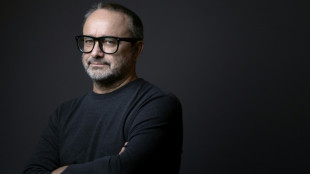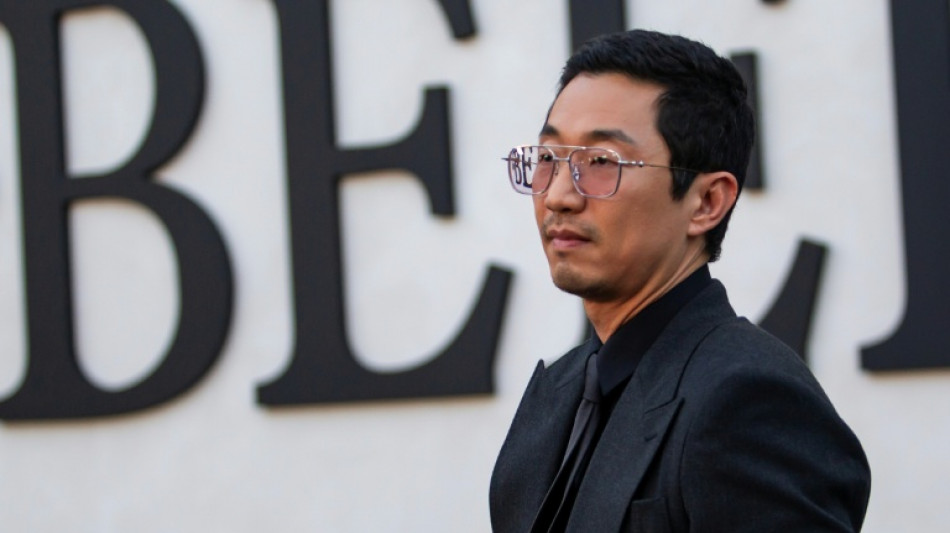
'Beef 2' tackles generational conflicts in second season: creator / Photo: Apu GOMES - AFP
After winning awards for his groundbreaking dark comedy, "Beef", creator Lee Sung Jing looked long and hard for the premise for a second season, but nothing seemed to work.
Then a dispute in his own neighborhood showed him the dramatic potential of generational conflict.
"The incident itself wasn't that interesting, but it was everyone's reactions to it," Lee told a press conference about his Netflix series.
While younger friends reacted with alarm to the fight, those over 40 dismissed it, he said.
"Gen Z peers... were all kind of like aghast, clutching their pearls, being like, 'did you call 911?' 'Is everyone okay?'
"Whereas my millennial and Gen X peers were like: 'Big deal.' That juxtaposition, I thought, was very interesting."
The first season of "Beef" starred Ali Wong and Steven Yeun as strangers whose escalating conflict stemmed from a road-rage incident.
"Beef 2," which premieres on Netflix on Thursday, explores tensions between couples from different generations in an elite country club setting.
Oscar Isaac stars as the manager of the club, and Carey Mulligan as his ever-present wife, a couple who are frequently at odds, but who present a smooth surface for professional purposes.
When younger employees, played by Charles Melton and Cailee Spaeny, capture video of the older couple fighting, the table is laid for some intergenerational strife, a bit of blackmail and some corruption.
The relationship between Melton and Spaeny's characters will be tested throughout a storyline that examines the hopeless disparity between the haves and the have-nots.
Lee, who also directs some episodes, drew inspiration for his characters from observing the generational divide at a club in Montecito, the tony Southern California enclave that is home to Hollywood A-listers, as well as Britain's Prince Harry and his wife Meghan.
While most of the members were over 62, the club's employees were millennials and Gen Z, he said.
"I found that to be a great microcosm for society, because, you know, no matter how hard those employees work, they're never going to become members."
Mulligan, who worked with Isaac on 2011's "Drive" and "Inside Llewyn Davis" two years later, said the rapport between them had been easy.
"Being able to bring in... that history, that shared past, that lived experience, and to have so much trust already, you know, it kind of means everything in those situations," she said.
"He's very bold in all his choices, but none of it feels forced. It feels very natural."
S.dEsposito--LDdC