Spain allows wildfire evacuees to return but France fears flames spreading / Photo: MIGUEL RIOPA - AFP
Spain on Tuesday lifted evacuation orders for more than a dozen areas but France ordered thousands more people to leave their homes, as firefighters battled to contain the worst wildfires in living memory.
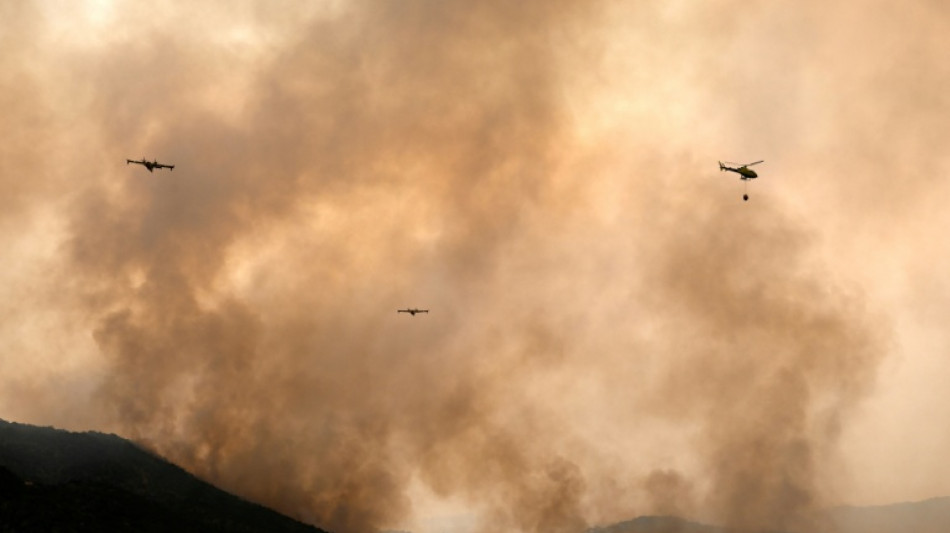
Flames have torn through vast swathes of tinder-dry forest and parched land west of Madrid and in France's southwest, incinerating properties and forcing tens of thousands of people to flee.
Firefighters in both countries are trying to contain the flames before the arrival of a fourth heatwave of the summer brings scorching temperatures.
In a sign of progress, Spain's interior ministry said it would end evacuation orders for 13 municipalities on Tuesday afternoon, without providing details of how many people were covered.
At a police checkpoint on the approach to Chapineria and Navas del Rey, two evacuated villages in the fire zone west of Madrid, more than 20 cars queued up in anticipation, an AFP reporter at the scene said.
But the mayor of nearby Pelayos de la Presa, Antonio Sin, described the scene for returning villagers as "a war zone".
"It has been a horrendous fire, a brutal one -- it's a monster that has run over us," he told AFP.
"It's not destruction like in a war where the bombs leave holes but it is a very high-level catastrophe."
In contrast, Marielle Mourgeon was among 4,000 people forced to cut short holidays in the French seaside village of Lacanau, in the Gironde area near Bordeaux, after camping sites were told to evacuate as a precaution.
"At first I thought my husband was joking, with the blue sky and the fires dying down," she said.
Conditions are set to worsen as a new heatwave hits western Europe this week.
French firefighters were "on the offensive", insisted commander Eric Pitault, standing in the middle of a 50-metre-wide, 25-kilometre-long firebreak cut with the help of civilian volunteers on the Cap Ferret peninsula.
- 'Turning the tide' -
Over the past six days, the largest French wildfire since 1949 has raged west of Bordeaux, forcing more than 220,000 people to flee and destroying 240 houses.
The prefect's office said that, while there were flare-ups overnight, these were under control and the burnt area had not increased.
In Spain, the worst of the fires have been west of the capital Madrid.
Despite the looming heatwave, Prime Minister Pedro Sanchez declared that "we are indeed turning the tide, and we can begin to see light at the end of the tunnel in the fight against these fires".
Fernando Casado, mayor of Robledo de Chavela, a village at the northern end of the flames, was more cautious.
"It is true that at night it (the fire) is a sleeping kitten, but during the day it can be a mighty lion. The next few hours are crucial."
Some 60,000 people were forced to flee the Spanish fires that have consumed 77,000 hectares (190,000 acres) -- an area almost the size of New York City.
Galia Borisova, a 55-year-old domestic helper, wanted to reach her animals in Picadas but had to wait.
"They say there's so much smoke that you can't breathe, even with a mask. And I believe it, because you could see it from here," she said.
- 'Extreme conditions' -
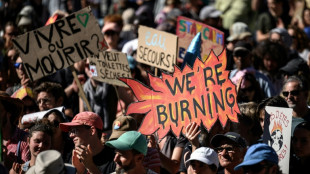
Europe has been gripped by successive heatwaves and a major drought this year, which scientists have attributed to human-caused climate change.
Extreme heat has parched vegetation that had grown vigorously during wet weather earlier in the year, creating tinderbox conditions.
UN climate chief Simon Stiell said "the climate alarm is blaring from every direction" and called for a quick end to fossil fuels.
While the focus is currently on western Europe, the EU's crisis management chief warned extreme heat could also see new fires in central Europe.
Spain's meteorological agency AEMET announced a new heatwave starting on Wednesday and lasting until at least the end of the week, with temperatures forecast to hit 42C in the northeast and 39C in the centre.
MeteoFrance also forecast more hot weather of up to 40C from Tuesday with dry wind.
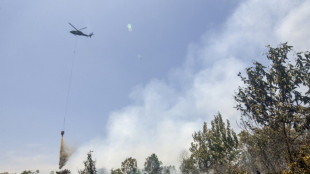
Near the French surfing hotspot of Le Grand Crohot, an AFP reporter saw violent gusts of wind whipping up flames as firefighting aircraft attempted to extinguish a rekindled fire.
"We're not out of danger," added Michael Elicegui, who returned to his home in Biscarrosse in the Landes region, after a separate wildfire.
burs-phz/gv
A.Famiglietti--LDdC