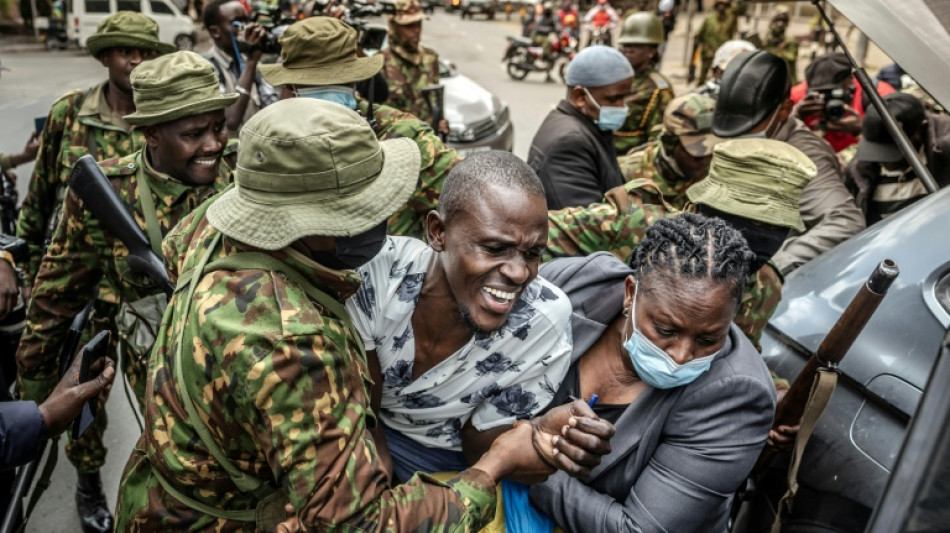
Kenya, Tanzania shut down protest anniversaries / Photo: Luis TATO - AFP
Kenya and Tanzania both deployed a massive police presence on Tuesday to prevent protests as the east African nations increasingly take a zero-tolerance approach to demonstrations.
The two countries have both faced major bouts of public unrest in the last two years and have responded with brutal police repression.
In Tanzania, rights groups and the opposition say thousands were killed by security forces during election unrest in October over alleged rigging and attacks on critics.
And at least 127 Kenyans were killed during protests over economic hardship, corruption and police brutality in June-July 2024 and the same period in 2025, according to a police watchdog.
Activists called for peaceful demonstrations on July 7 -- known as "Saba Saba" ("seven seven") -- which happens to mark historic protests in both countries.
But massive security deployments have deterred any action, with Tanzania recently banning all political gatherings, and Kenyan police refusing to accept any notifications of protests from rights groups.
Meanwhile, citizens are increasingly scared of raising their voices.
"I'm not ready to risk my life," Hussein Matimbwa, 33, a resident of Dar es Salaam in Tanzania, told AFP.
"The deaths that occurred last October are scary. Demonstrating is legal, but here in Tanzania you can be eliminated simply for participating," he added.
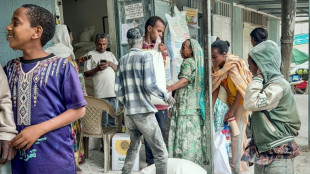
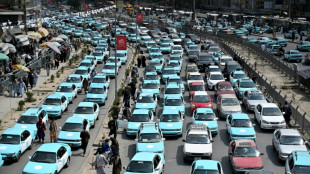
Police and military were stationed across Dar es Salaam, an AFP journalist saw, and the busy trading area of Kariakoo was largely deserted, with many stalls closed.
One man said he had hoped to protest but could not find support.
"Many people are afraid to die. Police and soldiers are everywhere with guns," he said.
- 'Undercover teams' -
In Kenya's capiatal Nairobi, police shut down roads and swarmed on a tiny group of protesters that had managed to gather in the city centre.
AFP saw at least three bundled into an unmarked car and police wagon.
"Why should they deploy security like this? We have a right to protest," said one of the group, Collins Otieno.
A police spokesman later told AFP that he was unaware of the details but it may have been "an arrest by our undercover teams".
It was a similar pattern used to prevent unrest on June 25, marking the anniversary of Kenyans storming parliament to oppose unpopular new taxes in 2024.
A group called the Economic Justice Movement had announced a march on Tuesday to draw attention to "extrajudicial killings, enforced disappearances, arbitrary arrests, and police brutality, but also an escalating economic crisis... and declining opportunities for millions of young people and families".
But many are too afraid to join in.
"There's a general sense of exhaustion," local rights group organiser Wanjira Wanjiru, of the Mathare Social Justice Centre, told AFP.
President William Ruto has grown increasingly combative towards critics, recently lashing out online at The Standard newspaper for its negative coverage.
The New York-based Committee to Protect Journalists called for an investigation on Monday after saying a senior journalist with The Standard narrowly escaped an abduction by armed men three days after Ruto criticised the paper.
A.Mariani--LDdC