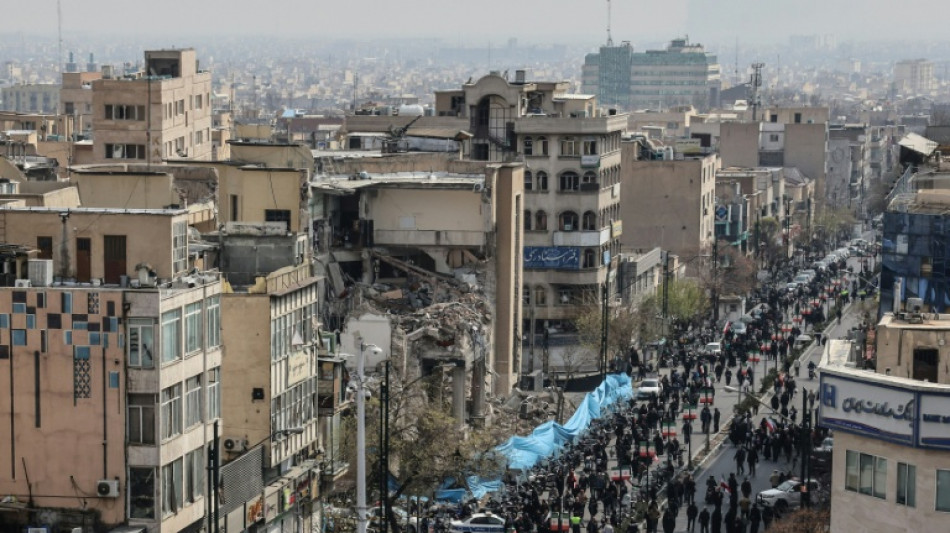
Iran targets fuel facilities, sending oil soaring again / Photo: Atta KENARE - AFP
Iran launched a new wave of attacks against Gulf energy targets on Thursday, hours after two oil tankers were hit, sending crude prices soaring again despite record reserve releases.
The renewed drone and missile attacks against Iran's Gulf neighbours and Israel followed a warning from Tehran that it could wage a prolonged war that would "destroy" the world economy.
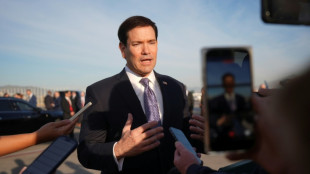
US President Donald Trump meanwhile insisted Iran was facing imminent defeat, though he cautioned that did not mean the war would end "immediately."
The war launched by the United States and Israel has rapidly spread across the region, with hundreds killed by Israeli strikes in Lebanon, and sparked global economic upheaval.
On Thursday morning, Bahrain told residents to stay inside and close windows after an Iranian attack on fuel tanks, while Saudi Arabia said it intercepted drones headed towards the Shaybah oil field and the embassies district.
Earlier, drones struck fuel tanks at Oman's Salalah port, where operations were subsequently suspended.
Shipping in and around the crucial Strait of Hormuz chokepoint also came under attack, with a container ship near the United Arab Emirates hit by an "unknown projectile," the UK maritime agency said in an alert Thursday.
The projectile caused a small fire onboard, but all crew were reported as safe, the agency said.
That incident followed an attack on two oil tankers near Iraq that authorities said Thursday had killed at least one crew member,
Another 38 had been rescued but a search for others was ongoing, authorities said.
The Iraqi government's media cell told national news agency INA that the "two tankers were subject to sabotage" and the oil ministry said it had "deep concern" about incidents involving oil tankers in the Gulf.
- 'End of the line' -
The Strait of Hormuz, though which a fifth of the world's oil passes, has effectively been closed by Iranian threats.
Iran has vowed that not one litre of oil will be exported from the Gulf while the US-Israeli attack continues.
In the last day alone, at least four incidents involving vessels in the region have been reported, including a Thai bulk carrier hit by two projectiles on Wednesday.
Three members of its crew are missing "and believed to be trapped in the engine room" of the ship, according to transport company Precious Shipping.
Suspected Iranian attacks were also reported elsewhere in the Gulf Thursday, with Kuwait saying two people were injured by a "hostile drone" that hit a residential building.
The UAE also said its air defence was responding to a missile threat.
The renewed attacks came shortly after Trump insisted Iran was "pretty much at the end of the line."
"Doesn't mean we're going to end it immediately, but they are," he told reporters.
He also threatened that Washington could strike infrastructure that would take a generation to rebuild, while indicating he would prefer to show restraint.
Earlier he said the United States must "finish the job" in Iran, adding that US forces had struck 28 Iranian mine-laying vessels.
- Oil prices spike again -
Iran's Revolutionary Guards meanwhile warned Wednesday they would strike "economic centres and banks" linked to US and Israeli interests, prompting more international firms to evacuate staff from Dubai.
The United States and Israel "must consider the possibility that they will be engaged in a long-term war of attrition that will destroy the entire American economy and the world economy," Ali Fadavi, an adviser to the Guards' commander-in-chief, told state television.
The war's economic impacts have already been felt widely.
On Thursday, oil prices soared past $100 a barrel, despite the International Energy Agency's decision to authorise a record release of strategic crude reserves.
The energy body said Wednesday that its members had agreed to unlock 400 million barrels of oil, including 172 million from the United States.
But the move was not enough to overcome fears of a prolonged conflict, and analysts said $90-100 a barrel could be the new normal for a while.
The war's spread has hit Lebanon particularly hard, with Israel launching strikes and ground operations against Iran-backed Hezbollah.
The offensive has killed more than 630 people, according to Lebanese authorities, while more than 800,000 people have registered as displaced, with around 126,000 of them staying in collective shelters.
Many others have been forced to sleep in the open, including along the Beirut seafront where an Israeli strike killed at least seven people on Thursday morning.
- 'Ran from room to room' -
That followed an earlier strike on a residential building in a central Beirut neighbourhood.
An AFP correspondent saw destroyed walls on the building's seventh and eighth floors, with damaged cars nearby.
When the strike hit, "I ran from room to room, pulled my wife and daughter out of the rooms and hid them behind a wall, then the second strike hit", said Fawzi Asmar, owner of a bakery on the same street.
The Israeli military said early Thursday that it had "begun a wide-scale wave of strikes targeting terror infrastructure belonging to the Hezbollah terrorist organization across Lebanon."
Israel's military said early Thursday it had detected a new launch of missiles directed at the state from Iran.
Iran's health ministry said on March 8 that more than 1,200 people have been killed in the war.
AFP is not able to access the sites of strikes or independently verify tolls in Iran.
In Israel, authorities said 14 people have been killed, while attacks in the Gulf have killed 24 people, including 11 civilians and seven US military personnel, according to local authorities and the US Central Command.
The war has cost the United States more than $11.3 billion, lawmakers were told in a Pentagon briefing, according to the New York Times.
burs-sah/hmn
D.Gismondi--LDdC