Iran, US hold talks in Oman after deadly protest crackdown / Photo: Haitham AL-SHUKAIRI - AFP
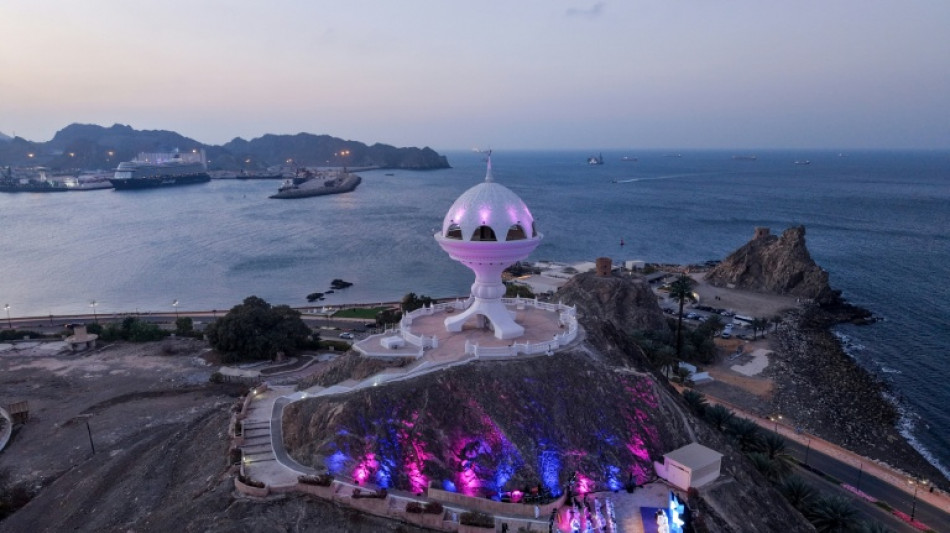
Iran and the United States began talks on Friday in Oman, with Washington refusing to rule out military action against the Islamic republic over its deadly crackdown on mass protests.
Iran has insisted the Oman-mediated talks will be centred solely on its nuclear programme, while the United States also wants to discuss Tehran's backing for militant groups in the region and its ballistic missile programme.
The talks are the first between the two foes since the United States joined Israel's war with Iran in June with strikes on nuclear sites.
President Donald Trump's Middle East envoy Steve Witkoff and Iranian Foreign Minister Abbas Araghchi are leading their delegations at the negotiations in Oman, which acts as a mediator between the countries.
Iranian state media reported the talks had begun, with Araghchi saying Tehran maintains "full readiness to defend the country's sovereignty and national security against any excessive demands or adventurism" by the United States.
"Iran enters diplomacy with open eyes and a steady memory of the past year. We engage in good faith and stand firm on our rights," Araghchi added on X.
"Commitments need to be honoured. Equal standing, mutual respect and mutual interest are not rhetoric -- they are a must and the pillars of a durable agreement," he said.
Iran had said on Thursday it had a "responsibility not to miss any opportunity to use diplomacy" to preserve peace, adding it hoped Washington would participate in the discussions "with responsibility, realism and seriousness".
The US delegation intends to explore "zero nuclear capacity" for Iran, White House Press Secretary Karoline Leavitt said, warning that Trump had "many options at his disposal aside from diplomacy".
- 'Big fleet' -
The meeting comes just under a month after the peak of a wave of nationwide protests in Iran against the clerical leadership, which rights groups say were repressed with an unprecedented crackdown that has left thousands dead.
"They're negotiating," Trump said of Iran on Thursday.
"They don't want us to hit them, we have a big fleet going there," he added, referring to the aircraft carrier group he has repeatedly called an "armada".
Trump initially threatened military action against Tehran over its crackdown on protesters and even told demonstrators "help is on its way".
But his rhetoric in recent days has focused on reining in the Iranian nuclear programme, which the West believes is aimed at making a bomb.
US Vice President JD Vance told SiriusXM in an interview broadcast Wednesday that Trump would "keep his options open".
"He is going to talk to everybody, he is going to try to accomplish what he can through non-military means and if he feels like the military is the only option then he is ultimately going to choose that," Vance said.
- 'Inflexibility' -
German Chancellor Friedrich Merz, speaking in the Qatari capital Doha, urged Iran's leadership to "truly enter talks", saying there was a "great fear of military escalation in the region".
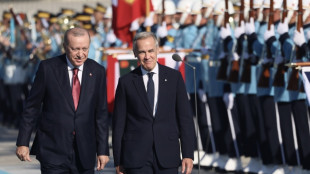
Turkish President Recep Tayyip Erdogan was quoted by Turkish newspapers as saying: "So far, I see that the parties want to make room for diplomacy," adding that conflict was "not the solution".
China said it supports Iran defending its interests and opposes "unilateral bullying".
There had been disagreement in the run-up to the talks over whether the meeting should also include regional countries and address Tehran's support of militant groups and its ballistic missile programmes, two US concerns that Iran resisted.
Citing unnamed Iranian officials, the New York Times said the United States agreed the talks would exclude regional actors, and while the meeting would focus on the nuclear issue, it would also discuss missiles and militant groups "with the goal of coming up with a framework for a deal".
"Iran continues to show inflexibility toward addressing US demands, which reduces the likelihood that Iran and the United States will be able to reach a diplomatic solution," the US-based Institute for the Study of War said.
With the American threats of military action still looming, the United States has manoeuvered a naval group led by aircraft carrier USS Abraham Lincoln into the region.
The Wall Street Journal cited a source as saying that the head of US military forces in the Middle East would join the latest talks.
Iran has repeatedly vowed it will hit back at US bases if attacked.
"We are ready to defend and it is the US president who must choose between compromise or war," state television on Thursday quoted army spokesman General Mohammad Akraminia as saying, warning that Iran has "easy" access to US regional bases.
burs-axn/ser
F.dGiugiaro--LDdC