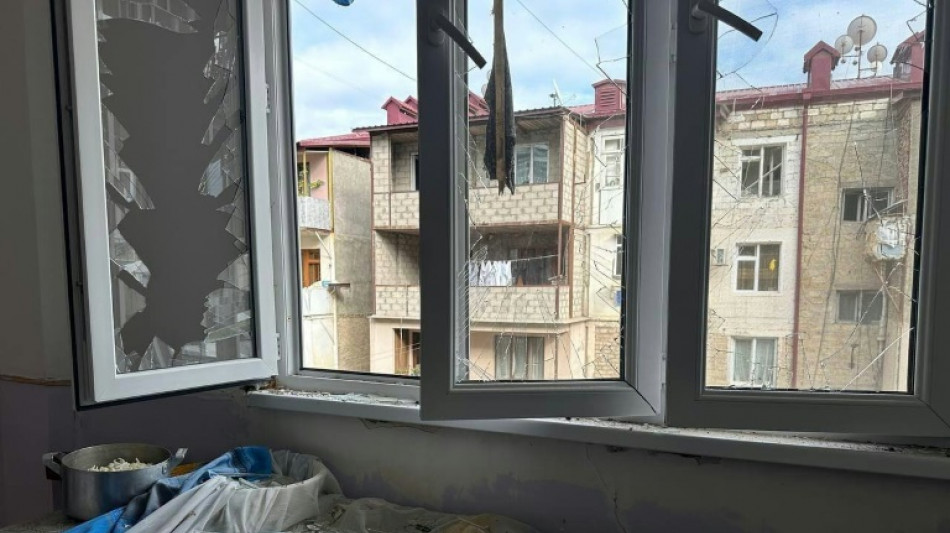
Armenian separatists, Azerbaijan begin peace talks on Karabakh / Photo: - - Nagorno-Karabakh Human Rights Ombudsman/AFP
Armenian separatists from the disputed territory of Nagorno-Karabakh joined peace talks with Azerbaijan on Thursday, after agreeing to lay down their arms following a lightning Azerbaijani military operation.
Baku says it has regained control over the territory for the first time in decades, with separatists agreeing to disarm in the face of clashes that they said killed 200 people.
However, gunfire rang out in the separatist stronghold of Stepanakert on Thursday despite the ceasefire with Azerbaijan's forces that went into effect one day earlier.
Earlier on Thursday an AFP journalist saw a convoy of black cars arriving for the talks in the city of Yevlakh, some 200 kilometres (125 miles) west of the capital Baku.
The convoy was accompanied by a car with a Russian flag and Russian army number plates, and images shown on Azerbaijani TV later showed the two delegations around a table next to an Azerbaijani flag.
Russia sent peacekeepers to mountainous Nagorno-Karabakh in 2020 as part of a deal to end a six-week war there and President Vladimir Putin has said the peacekeeping contingent would mediate the talks.
The UN Security Council is also holding an emergency session later on Thursday to discuss the situation in Karabakh after Azerbaijan launched its operation on Tuesday and claimed victory on Wednesday.
- 'Peaceful reintegration' -
Since the collapse of the Soviet Union, Armenia and Azerbaijan have fought two wars over the region.
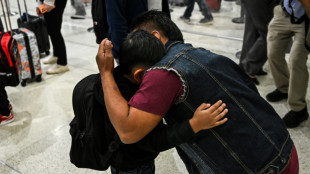
The years of conflict have been marked by abuses on both sides, and there are concerns of a fresh refugee crisis as Karabakh's Armenian population fears being forced out.
The collapse of separatist resistance represents a major victory for Azerbaijan's President Ilham Aliyev in his quest to bring the Armenian-majority region back under Baku's control.
Aliyev said this week's events "will have a positive impact on the peace process between Azerbaijan and Armenia".
His foreign policy adviser Hikmet Hajiyev promised safe passage for the separatists who surrendered and said Baku sought the "peaceful reintegration" of Karabakh Armenians.
A separatist official said more than 10,000 people had been evacuated from Armenian communities in Nagorno-Karabakh.
The EU and United States had been mediating talks between Baku and Yerevan in recent months in a bid to secure a lasting peace.
In a televised address on Wednesday, Aliyev said Azerbaijan had "restored its sovereignty as a result of successful anti-terrorist measures in Karabakh."
He claimed that most of the Armenian forces in the region had been destroyed and said the withdrawal of separatist troops had already begun.
Turkish President Recep Tayyip Erdogan on Thursday expressed "wholehearted support" for traditional ally Azerbaijan in a call with Aliyev.
- Truce deal -
Despite the announcement of a ceasefire, Armenia's defence ministry late on Wednesday said Azerbaijan had fired on its positions along the border between the arch-foes. Such frontier skirmishes are frequent.
Under the truce, the separatists said they had agreed to fully dismantle their army and that Armenia would pull out any forces it had in the region.
Azerbaijan's defence ministry said "all weapons and heavy armaments are to be surrendered".
After the Soviet Union fell apart, Armenian separatists seized the region -- internationally recognised as part of Azerbaijan -- in the early 1990s.
That sparked a war that left 30,000 people dead and displaced hundreds of thousands.
In a six-week war in 2020, Azerbaijan recaptured swathes of territory in and around the region.
- 'War is over' -
Jubilant residents in Azerbaijan's capital expressed hope the deal heralded a definitive victory and the end of the decades-long conflict.
"Finally, the war is over," an ecstatic 67-year-old pensioner Rana Ahmedova told AFP.
In Armenia, there was fury at a second defeat in Karabakh in three years.
Clashes broke out in the capital Yerevan, where thousands of protesters waving the separatist region's flag blocked a main road and riot police guarded official buildings.
Demonstrators threw bottles and stones at police as they slammed the government's handling of the crisis. Officers used stun grenades and made arrests.
The loss in Karabakh ratchets up domestic pressure on Armenian Prime Minister Nikol Pashinyan, who has faced stinging criticism at home for making concessions to Azerbaijan since 2020.
Pashinyan "must leave, time has shown that he cannot rule. No one gave him a mandate for Karabakh to capitulate," he said.
The Armenian leader has insisted that his government had not been involved in drafting the latest ceasefire deal.
Again denying his country's army was in the enclave, he said he expected Russia's peacekeepers to ensure Karabakh's ethnic-Armenian residents could stay "in their homes, on their land".
L.Giordano--LDdC