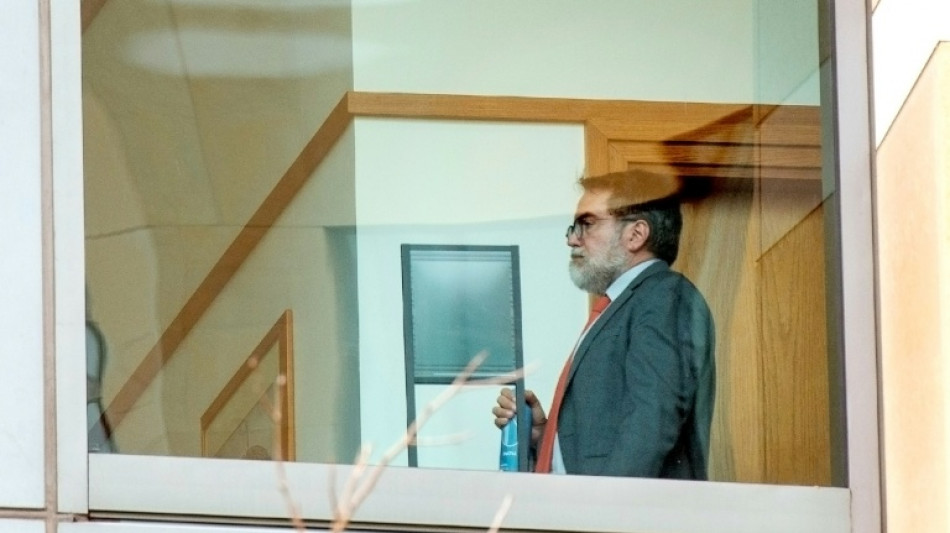
Some of Meta's safety tools were 'designed to fail': witness / Photo: Karl Mondon - AFP
A former employee testified on Wednesday that some of Meta's safety tools for Facebook and Instagram were "designed to fail," contradicting the company's defense strategy in a landmark trial in California.
For a second day, Meta is fending off accusations by a coalition of US states that it deliberately designed its products to hook children and gather their data while misleading the public.
A loss for the social media giant could see it slapped with a $200 billion penalty, force fundamental changes to its business model and send shockwaves through the industry.
Meta doesn't deny that some users, including teens, have negative experiences on its two core apps, but the company maintains it created features to reduce those risks.
"There can be no dispute that Meta has both recognized that people can struggle with their use of social media and tried to come up with tools to help them," Meta's lawyer, Paul Schmidt, said on Tuesday during opening statements.
However, Meta made some of those tools opt-in, meaning that users had to intentionally turn them on, including a feature launched in 2021 called "Take a Break," which lets users set reminders to take breaks from scrolling on Instagram.
"In my experience, 'Take a Break' is a feature that's designed to fail," Arturo Bejar, a former Meta engineering director, testified on the second day of a trial that is expected to last around six weeks.
Bejar is the first witness to take the stand and has argued that the company prioritized profits over safety by encouraging people to spend more and more time on Facebook and Instagram.
That strategy led to decisions like making safety features optional, including tools designed to combat endless scrolling or limit enticing notifications.
"Notifications are built and designed in order to bring people back, so they spend more time and get more revenue. They're not designed for mental health... or the safety of the person," Bejar said on Wednesday.
Days before the trial, Meta attempted to block Bejar from testifying, a move that the judge denied.
- 'Big tobacco moment' -
Many experts have called this trial social media's "big tobacco moment," referring to a blockbuster settlement between tobacco companies in the United States and dozens of states in the 1990s, which led to billions of dollars in penalties and changes to how products were marketed.
Similarly, dozens of states are once again intervening where "Congress failed to act," Colorado Attorney General Phil Weiser said Tuesday afternoon.
The tobacco and social media cases both involve "public health, and in some cases, marketing to kids that hurt kids," Weiser continued.
During opening statements on Tuesday, California prosecutor Megan O'Neill painted Meta's business model as one intended to "hook the users, hold them for as long as they can, harvest their data, and then hide the truth from the public."
Meta "exploited how kids' brains work," O'Neill said.
Founder and CEO Mark Zuckerberg and Instagram head Adam Mosseri are among the star witnesses expected to testify, according to court documents.
However, during a press conference Tuesday afternoon, California Attorney General Rob Bonta declined to confirm whether Zuckerberg would be called to the stand.
Before the trial began, the company denied the allegations, insisting it had worked with parents, experts and law enforcement to incorporate safeguards for children.
M.Vecchiarelli--LDdC