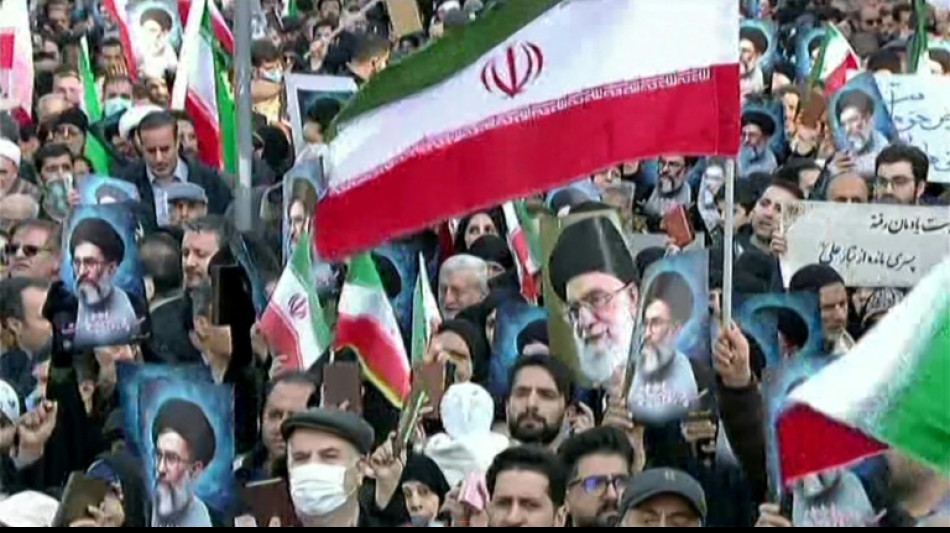
Trump hits Iran trade partners with tariffs as protest toll soars / Photo: - - IRAN PRESS/AFP
US President Donald Trump announced a 25-percent tariff on any country doing business with Iran, ramping up pressure as a rights group estimated a crackdown on protests has killed at least 648 people.
Iranian authorities insisted they have regained control after successive nights of mass protests nationwide since Thursday that have posed one of the biggest challenges to the clerical leadership since the 1979 Islamic revolution ousted the shah.
But rights groups accuse the government of using live fire against protesters and masking the scale of the crackdown with an internet blackout that has now lasted more than four days.
International phone calls however have resumed in Iran after being blocked for days, an AFP correspondent in Tehran said on Tuesday, but only outgoing calls could be made.
Trump, who has repeatedly threatened Iran with military intervention, said in a social media post on Monday that the new levies would "immediately" hit the Islamic republic's trading partners who also do business with the United States.
"This order is final and conclusive," he wrote, without specifying who it will affect.
Iran's main trading partners are China, Turkey, the United Arab Emirates and Iraq, according to economic database Trading Economics.
The White House said Monday that Trump remained "unafraid" to deploy military force against Iran, but was pursuing diplomacy as a first resort.
- Large-scale killings -
The Norway-based NGO Iran Human Rights (IHR) said it had confirmed 648 people killed during the protests, including nine minors, but warned the death toll was likely much higher -- "according to some estimates, more than 6,000".
The internet shutdown has made it "extremely difficult to independently verify these reports", IHR said, adding that an estimated 10,000 people had been arrested.
"Iranian authorities have significantly intensified their lethal crackdown on protesters since January 8, with credible reports that security forces are carrying out large-scale killings across the country," Human Rights Watch said.
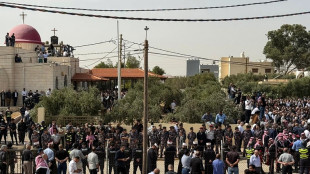
Iranian state media has said dozens of members of the security forces have been killed, with their funerals turning into large pro-government rallies. Authorities have declared three days of national mourning for those killed.
Foreign Minister Abbas Araghchi, speaking to Al Jazeera, insisted that the government had been "in dialogue" with the protesters in the initial phase of the movement and the internet was only cut "after we confronted terrorist operations and realised orders were coming from outside the country".
Addressing Trump's threats, he added: "We are prepared for any eventuality and we hope Washington will choose a wise option. It doesn't matter which option they choose, we are ready for it."
- 'Last days' -
The government on Monday sought to regain control of the streets with mass nationwide rallies that supreme leader Ayatollah Ali Khamenei hailed as proof that the protest movement was defeated, in a "warning" to the United States.
In power since 1989 and now 86, Khamenei has faced significant challenges, most recently the 12-day war in June against Israel which resulted in the killing of top security officials and forced him to go into hiding.
"When a regime can only hold on to power through violence, then it is effectively finished," said German Chancellor Friedrich Merz during a trip to India. "I believe that we are now witnessing the last days and weeks of this regime."
Analysts however have cautioned that it is premature to predict the immediate demise of the theocratic system, pointing to the repressive levers the leadership has, including the Revolutionary Guards Corps (IRGC), which are charged with safeguarding the Islamic revolution.
"These protests arguably represent the most serious challenge to the Islamic republic in years, both in scale and in their increasingly explicit political demands," Nicole Grajewski, professor at the Sciences Po Centre for International Studies in Paris, told AFP.
She said it was unclear if the protests would unseat the leadership, pointing to "the sheer depth and resilience of Iran's repressive apparatus".
French President Emmanuel Macron issued a statement condemning "the state violence that indiscriminately targets Iranian women and men who courageously demand respect for their rights".
Prize-winning Iranian filmmaker Jafar Panahi told broadcaster France Inter: "The Iranian people are defenceless today, and despite all that, they are out on the streets."
Reza Pahlavi, the US-based son of Iran's ousted shah who has been vocal in calling for protests, said Trump was a man who "means what he says and says what he means" and who "knows what's at stake".
"The red line that was drawn has been definitely surpassed by this regime."
D.Gismondi--LDdC